
From Treatment to Prevention: A Paradigm Shift in Acute Exacerbation Management of Chronic Obstructive Pulmonary Disease Using a Multimodal Wearable Intelligent Sensing System
Keywords:
Chronic Obstructive Pulmonary Disease, wearable devices, Multimodal sensing, Edge computing, Exacerbation prediction, Healthcare paradigm shiftAbstract
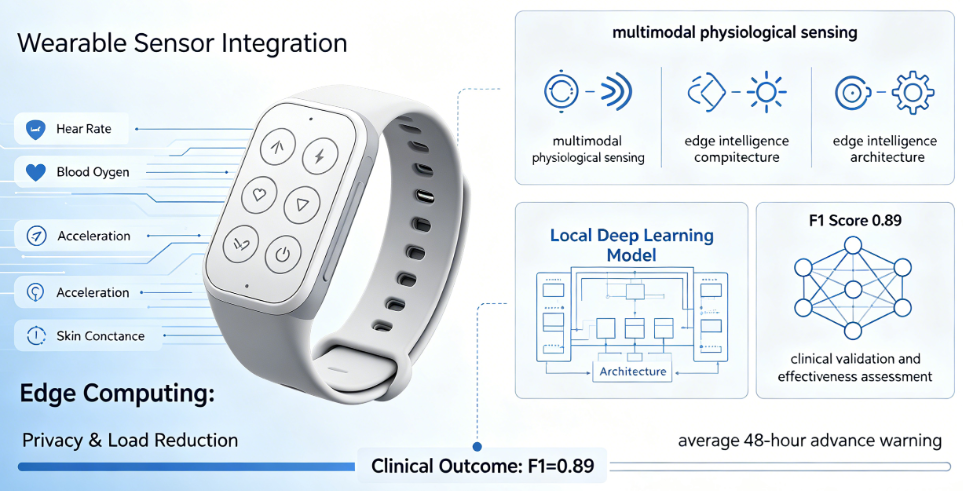
Chronic Obstructive Pulmonary Disease (COPD) ranks among the leading causes of death globally, with acute exacerbations serving as the primary driver of hospitalizations and fatalities. The traditional healthcare model, centered on “treatment,” lacks early warning capabilities for exacerbations. This paper systematically reviews the multimodal wearable intelligent sensing system for COPD exacerbation management, using research from Dr. Sofia Ramirez’s team at the University of Barcelona as a starting point. The team integrated four sensors—measuring heart rate, blood oxygen levels, acceleration, and skin conductance—into a lightweight wristband. By deploying lightweight deep learning models locally for real-time data processing on the edge, the system achieved early warnings for acute exacerbations an average of 48 hours in advance (F1 score: 0.89). This paper further provides an in-depth analysis from three dimensions: multimodal physiological sensing, edge intelligence computing architecture, and clinical validation and effectiveness assessment. It explores the dual value of the edge computing architecture in safeguarding patient privacy while reducing data transmission load. The research demonstrates that wearable intelligent sensing technology is driving a fundamental shift in the healthcare paradigm from “treatment” to “prevention,” representing a value leap in the life sciences from mechanistic deconstruction to technological intervention.
Downloads
Published
Issue
Section
License
Copyright (c) 2026 Advanced Interdisciplinary Science and Technology

This work is licensed under a Creative Commons Attribution 4.0 International License.