Multidimensional Analysis of Obesity in Middle School Students: Causes, Effects and Systematic Intervention Strategies
Keywords:
adolescent obesity, social ecological model, metabolic regulation, behavioral intervention, policy coordinationAbstract
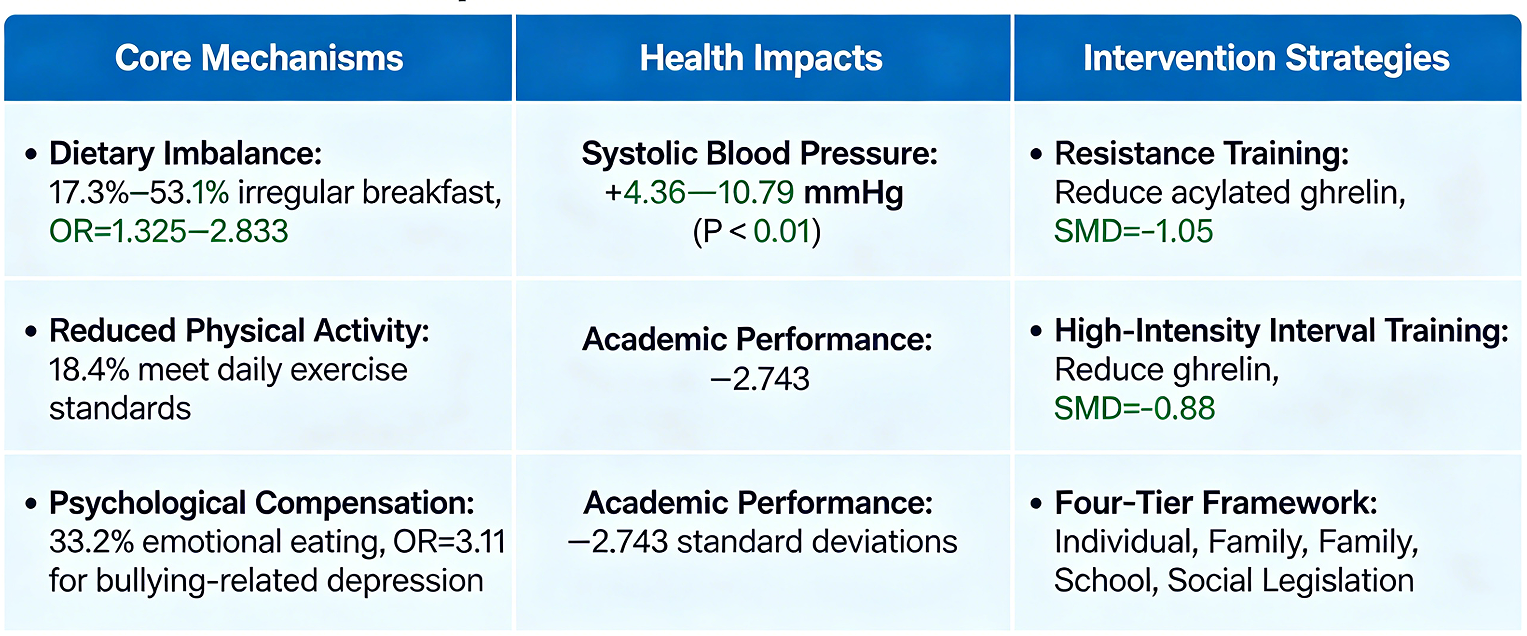
This study conducts a systematic analysis of the multidimensional causes, health impacts, and intervention strategies related to obesity among Chinese middle school students. Through a systematic review of 98 Chinese and English literature articles published between 2018 and 2023, adhering to the PRISMA protocol, three core mechanisms contributing to obesity were identified: dietary imbalance (17.3%–53.1% of students had irregular breakfast routines, OR = 1.325–2.833), reduced physical activity (only 18.4% met daily exercise standards), and psychological compensation (33.2% engaged in emotional eating, OR = 3.11 for bullying-related depression). Obesity was found to increase systolic blood pressure by 4.36–10.79 mmHg (P < 0.01) and reduce academic performance by 2.743 standard deviations. Systemic risks are also associated with community environments, with low-income areas having only one-third the sports facility density of high-income regions. The study validated the distinct benefits of resistance training (reducing acylated ghrelin, SMD = -1.05) and high-intensity interval training (reducing ghrelin, SMD = -0.88). A four-tier intervention framework based on the socio-ecological model—encompassing individual micro-behavioral adjustments, family contracts, school policies, and social legislation—was proposed. This framework provides a viable approach for achieving the "Healthy China 2030" goal of zero growth in adolescent obesity adolescent obesity.
Downloads
Published
Issue
Section
License
Copyright (c) 2025 Advanced Interdisciplinary Science and Technology

This work is licensed under a Creative Commons Attribution 4.0 International License.