Review · Open Access
Foundations of Interdisciplinary Science and Technology: From Disciplinary Depth to Convergent Synthesis
Received: 7 March 2025 |
Revised: 18 March 2025 |
Accepted: 23 March 2025 |
Published online: 1 April 2025
Abstract
Abstract: This review article, written for the inaugural issue of Advanced Interdisciplinary Science and Technology (AIST), provides a systematic framework for understanding, evaluating, and practicing genuine interdisciplinarity. It distinguishes multidisciplinary adjacency, cross-disciplinary collaboration, and true interdisciplinary synthesis, then formalizes the core principles of knowledge integration across disparate fields. The review synthesizes insights from philosophy of science, complex systems theory, empirical studies of high-performing convergent teams, and frontier domains such as AI-driven discovery, nano-biotechnology, and climate-systems modeling. Key contributions include: (1) the concept of translational literacy as a core competency; (2) methodological protocols for cross-domain data fusion under divergent uncertainty conventions; (3) design principles for bio-inspired nanomaterials that unify surface chemistry, protein engineering, and systems biology; and (4) institutional conditions that enable genuine synthesis. The review concludes with a baseline agenda for evaluating progress in interdisciplinary science and a set of irreducible research questions that demand simultaneous engagement across nanoscale fabrication, physiological modeling, and ethical risk assessment.
Keywords: Interdisciplinary synthesis; translational literacy; knowledge integration; convergent research; AI-driven discovery; nano-biotechnology; team science
1. Introduction: The Specialization Paradox and the Interdisciplinary Imperative
For much of the past century, scientific progress has been driven by a remarkably successful strategy: deepening specialization. The reductionist approach---breaking complex phenomena into their constituent parts and studying those parts in isolation---has yielded extraordinary insights. Physicists mapped the subatomic world, biologists decoded the structure of DNA and sequenced entire genomes, chemists synthesized molecules of ever-increasing complexity, and each discipline developed its own sophisticated language, experimental techniques, and standards of evidence. This division of intellectual labor was not merely convenient; it was necessary. No single mind could master the full sweep of scientific knowledge, and no single set of methods could address every type of question.
Yet the very success of specialization has produced an unintended consequence. The most pressing challenges of the twenty-first century---climate change, pandemic preparedness, sustainable energy transitions, neurodegenerative diseases, and the ethical deployment of artificial intelligence---reside not within the tidy boundaries of any single discipline, but at their messy, fertile intersections. Climate change cannot be understood through atmospheric physics alone; it demands integration with oceanography, ecology, economics, political science, and materials science. Pandemic preparedness requires virology, immunology, epidemiology, supply chain logistics, behavioral psychology, and public health ethics. These problems are wicked in the technical sense: they resist linear solutions, involve multiple scales of organization, and generate unintended consequences when addressed through narrow frameworks.
The present review undertakes a foundational mission: to articulate the core principles, methodological frameworks, and epistemological commitments that define genuine interdisciplinary synthesis. It is written for researchers trained within traditional disciplines who sense the limitations of those boundaries, for funding agencies seeking to evaluate genuinely integrative proposals, and for academic institutions restructuring themselves around problems rather than departments. The argument proceeds in several stages. First, we disambiguate interdisciplinarity from related concepts. Second, we introduce formal frameworks for knowledge integration drawn from philosophy of science, complex systems theory, and empirical studies of successful research centers. Third, we examine methodological foundations in two frontier domains---AI-driven discovery and nano-biotechnology---where interdisciplinary synthesis is already producing transformative results. Fourth, we analyze the human and institutional conditions that enable or inhibit genuine integration. Fifth, we propose a baseline for evaluating progress and identify irreducible research questions that demand convergent approaches.
2. Disambiguating Interdisciplinarity: From Adjacency to Integration
Before one can practice interdisciplinary science, one must understand what distinguishes it from related but distinct modes of research. The terms multidisciplinary, cross-disciplinary, transdisciplinary, and interdisciplinary are often used interchangeably, but they describe qualitatively different relationships among disciplines.
Multidisciplinarity: Additive Contributions Without Integration
In a multidisciplinary project, researchers from different disciplines each contribute their piece to a shared problem, but the pieces remain essentially unchanged by the encounter. A chemist synthesizes a compound, a biologist tests it on cell cultures, and an engineer incorporates it into a device. Each expert works within their own conceptual framework, using their own methods, and reporting results in their own vocabulary. The final product is additive---the sum of disciplinary contributions---but not transformative. Multidisciplinarity is valuable and often necessary, but it does not generate new synthetic frameworks.
Cross-Disciplinarity: Interactive but Not Transformative
Cross-disciplinary research involves active exchange among disciplines. Researchers learn enough of each other's languages to ask questions, share data, and interpret results collaboratively. A physicist might learn to design biological experiments; a biologist might learn to interpret spectroscopic data. However, the fundamental categories, assumptions, and methods of each discipline remain intact. Cross-disciplinary work is more interactive than multidisciplinary work, but it stops short of dissolving boundaries.
True Interdisciplinarity: Dissolution of Boundaries into New Synthetic Languages
Genuine interdisciplinarity occurs when concepts, experimental techniques, data modalities, and theoretical languages from distinct fields are not simply brought into conversation but are fundamentally transformed through their encounter with one another. The boundary between chemistry, biology, and engineering dissolves into a new synthetic language. This is not the erasure of disciplinary expertise---far from it. Deep disciplinary training remains essential. But that depth is deployed in service of integration, not as a walled garden.
Consider the field of systems biology, which emerged not from biologists learning a bit of mathematics nor from mathematicians learning a bit of biology, but from a genuine synthesis in which the concepts of feedback, robustness, and emergence became as central as the concepts of gene, protein, and pathway. Similarly, the field of materials informatics did not merely apply machine learning to materials data; it transformed both materials science (by introducing probabilistic representations of structure-property relationships) and machine learning (by developing algorithms that respect crystallographic symmetries and thermodynamic constraints).
The epistemological commitment underlying true interdisciplinarity is that integration is transformative. When done well, the resulting framework is irreducible to any of its contributing disciplines. This is where genuinely novel paradigms emerge.
3. Foundational Frameworks for Knowledge Integration
If genuine interdisciplinarity is transformative integration, what frameworks enable such integration? Three bodies of thought provide essential foundations: philosophy of science, complex systems theory, and empirical studies of successful interdisciplinary research centers.
Lessons from the Philosophy of Science
Philosophy of science offers several concepts crucial for interdisciplinary integration. Reduction and emergence provide a vocabulary for discussing how properties at one scale relate to properties at another. Reductionism---the attempt to explain higher-level phenomena in terms of lower-level components---has been extraordinarily successful in some domains but reaches its limits in systems where feedback loops and nonlinear interactions produce genuinely emergent behavior. Interdisciplinary synthesis requires knowing when reduction is appropriate and when emergent concepts are indispensable.
The concept of trading zones, introduced by historian of science Peter Galison, describes spaces where researchers from different communities develop a shared vocabulary and set of practices sufficient to coordinate work, even if they do not fully share each other's worldviews. Trading zones can be local (a specific set of agreed-upon protocols) or global (a new disciplinary language). Successful interdisciplinary centers often create trading zones intentionally, through shared instruments, common data formats, and regular forums for exchange.
Complex Systems Theory
Complex systems theory provides formal tools for understanding phenomena that span multiple scales and involve interacting components with feedback. Key concepts include: emergence (system-level properties not present at the component level), nonlinearity (small causes producing large effects), feedback loops (both reinforcing and balancing), adaptation (systems that change in response to their environment), and robustness (maintenance of function despite perturbations).
For interdisciplinary research, complex systems theory offers a crucial insight: the behavior of an integrated system cannot be deduced simply from the behavior of its parts in isolation. This means that interdisciplinary synthesis is not merely a matter of assembling disciplinary insights; it requires studying the interactions themselves. A climate model is not just atmospheric physics plus oceanography plus ecology; it is a coupled system in which the interactions among these components produce phenomena (such as El Niño) that none of the components exhibits alone.
Empirical Insights from Pioneering Interdisciplinary Research Centers
Decades of experience from interdisciplinary research centers---from the Santa Fe Institute to the RIKEN Center for Computational Science to the MIT Media Lab---have produced actionable lessons. Successful centers share several characteristics. First, they create persistent physical proximity: shared laboratory spaces, common areas, and co-located offices reduce the friction of cross-disciplinary communication. Second, they develop common data infrastructures: when all researchers use compatible data formats, metadata standards, and repository systems, integration becomes routine rather than heroic. Third, they establish rotational or joint appointments: researchers who spend significant time in multiple departments develop the translational literacy essential for synthesis. Fourth, they design incentive systems that reward integrative outputs---co-authored papers, shared grants, joint software development---not just single-author publications or solo grants.
Translational Literacy as a Core Competency
Across these frameworks, a single concept emerges as central: translational literacy. This is the ability of researchers not only to respect but to actively translate the core assumptions, constraints, and affordances of other fields into their own intellectual vocabulary. Translational literacy goes beyond mere tolerance of other disciplines; it requires understanding enough of another field's epistemology to ask: What does this field take for granted? What counts as evidence? What are its canonical failures? What are its unspoken constraints?
Translational literacy is not shallow knowledge. A materials scientist with translational literacy in biology does not need to perform a Western blot, but does need to understand that biological systems exhibit stochastic variability that materials scientists might mistakenly attribute to measurement error. A biologist with translational literacy in machine learning does not need to implement a transformer architecture, but does need to understand that training data distribution shapes model generalization---a concept with direct implications for experimental design.
Developing translational literacy requires deliberate effort: reading outside one's field, attending seminars in other departments, participating in joint lab meetings, and---most importantly---engaging in sustained collaborative problem-solving where translation is necessary to make progress.
4. Methodological Foundations for Convergent Research
Translational literacy finds its expression in concrete methodologies. This section examines two frontier domains where interdisciplinary synthesis is already producing transformative results: AI-driven discovery and nano-biotechnology.
AI-Driven Discovery: From Pattern Recognition to Hypothesis Generation
Machine learning has transformed from a tool for pattern recognition to a potential partner in scientific discovery. However, this transformation depends critically on interdisciplinary integration. Machine learning models are not theory-free; they embed assumptions about data distribution, noise structure, and functional relationships. When these assumptions match the target domain, discovery accelerates. When they mismatch, models produce confident nonsense.
The central methodological challenge is that different disciplines have different conventions for uncertainty quantification and data provenance. A materials scientist might report measurement uncertainty as a standard deviation from repeated runs under identical conditions. A biologist might report biological variability across different samples or different days. A climate modeler might report ensemble spread across different model initializations. These conventions are not wrong---each is appropriate to its domain---but they are not directly comparable. An AI model trained on data from multiple disciplines must either harmonize these uncertainty representations or risk learning spurious patterns.
Emerging best practices include: (1) cross-disciplinary data curation protocols that require explicit documentation of uncertainty sources and measurement conditions; (2) probabilistic machine learning methods that can accommodate heterogeneous uncertainty representations; and (3) benchmark datasets constructed specifically to test cross-domain generalization. The most successful AI-driven discovery projects are not those with the most sophisticated algorithms, but those with the most carefully curated, cross-disciplinarily validated training data.
Nano-Biotechnology: Unifying Principles for Bio-Inspired Nanomaterials
Nano-biotechnology sits at the intersection of materials science, chemistry, biology, and medicine. The goal is to engineer nanomaterials that interface with biological systems---for drug delivery, biosensing, tissue engineering, or imaging. The challenge is that biological systems are dynamic, adaptive, and context-dependent, while synthetic nanomaterials are typically designed for static, well-defined environments.
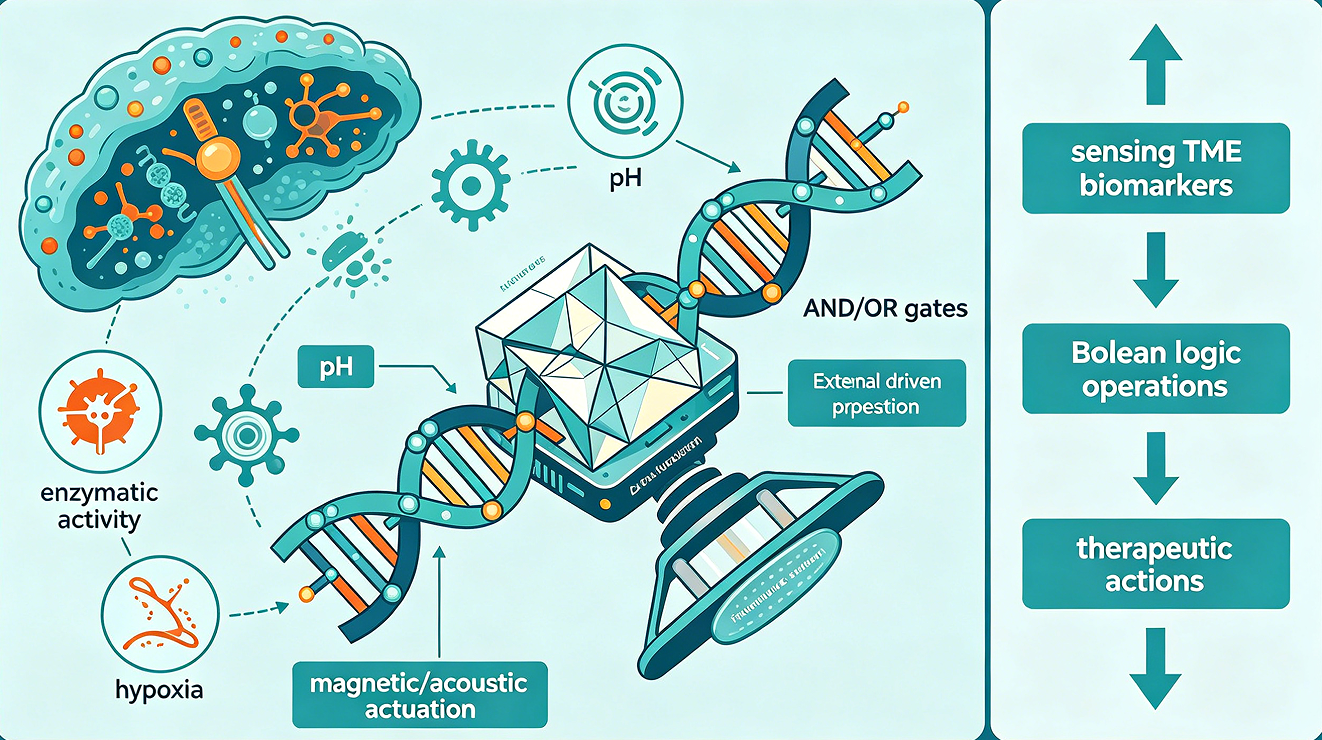
Foundational contributions from the past decade have begun to map the design space for bio-inspired nanomaterials. Three unifying principles have emerged. First, long-term stability at synthetic-biological interfaces requires not just chemical inertness but dynamic compatibility: the nanomaterial must adapt to changing biological conditions (pH, ionic strength, enzymatic activity) without degrading or triggering adverse responses. This demands integration of surface chemistry, protein engineering, and systems biology. Second, targeted functionality requires what might be called multivalent recognition: the nanomaterial must bind its biological target with high specificity, but biological targets are often heterogeneous and variable. Third, predictable in vivo behavior remains the grand challenge. Achieving predictability requires integrating pharmacokinetic modeling, immunology, toxicology, and materials science into a unified framework.
The unifying insight across these principles is that the whole exceeds the sum of its parts. A nanomaterial designed by surface chemistry alone, without biological integration, will fail. A biological insight alone, without materials implementation, remains theoretical. Genuine progress requires simultaneous, integrated design across all three domains.
5. The Human and Institutional Dimensions of Interdisciplinary Work
Even with the right conceptual frameworks and methodologies, interdisciplinary research fails without supportive human and institutional conditions. This section synthesizes empirical studies of successful cross-disciplinary teams and identifies the structural conditions that enable genuine synthesis.
Large-scale empirical studies of team science have identified consistent predictors of interdisciplinary success. Psychological safety is essential: team members must feel able to ask naive questions, admit uncertainty, and challenge assumptions. Facilitated coordination significantly improves outcomes, often through a dedicated project manager. Shared problem framing distinguishes successful from unsuccessful teams, requiring members to negotiate what the problem is and what counts as a solution. Beyond team dynamics, institutional structures matter profoundly: shared laboratory spaces, incentive systems that reward integrative outputs, and career pathways for interdisciplinary researchers are critical. A recurring warning is against performative interdisciplinarity: projects described in the language of convergence that, in execution, revert to siloed work.
6. Toward Irreducible Research Questions: Examples and Agendas
The ultimate test of interdisciplinary synthesis is the ability to formulate and pursue research questions that cannot be asked---let alone answered---within any single discipline. Illustrative irreducible questions include: "How do we design nanomaterials that maintain recording and stimulation fidelity across years of neural tissue remodeling, while incorporating adaptive algorithms that respect both neural plasticity and patient autonomy?" Such questions make it impossible to revert to performative interdisciplinarity; the integration is not optional but the research object itself.
7. A Baseline for Evaluating Progress in Interdisciplinary Science and Technology
This inaugural issue proposes a baseline for evaluating progress along three dimensions: epistemic integration (transformation of disciplinary concepts), methodological fusion (combination of methods into new protocols), and institutional sustainability (reproducible and scalable structures). At the individual level, progress in translational literacy can be assessed through the ability to paraphrase other disciplines' core assumptions and to design irreducible research questions.
8. Conclusion: Depth Across Breadth -- The Uncomfortable but Indispensable Synthesis
This review has argued that the future of scientific progress lies not in choosing between depth and breadth, but in achieving depth across breadth. The false choice---specialization versus generalization---obscures the real challenge: developing deep expertise in one's home discipline while cultivating enough translational literacy to integrate that expertise with others. Genuine interdisciplinarity is difficult, but for the problems that define our time---climate change, pandemic preparedness, sustainable energy, neurodegenerative disease, ethical AI---it is indispensable. No single discipline will solve these problems. Only integration will. The inaugural issue of Advanced Interdisciplinary Science and Technology is not a destination. It is a beginning.
References
[1] Galison, P. (1997). Image and Logic: A Material Culture of Microphysics. University of Chicago Press.
[2] Kuhn, T. S. (1962). The Structure of Scientific Revolutions. University of Chicago Press.
[3] Mitchell, S. D. (2003). Biological Complexity and Integrative Pluralism. Cambridge University Press.
[4] National Research Council. (2014). Convergence: Facilitating Transdisciplinary Integration. National Academies Press.
[5] Stokols, D., Hall, K. L., Taylor, B. K., & Moser, R. P. (2008). The science of team science. American Journal of Preventive Medicine, 35(2), S77-S89.
[6] Wagner, C. S., et al. (2011). Approaches to understanding and measuring interdisciplinary scientific research. Bibliometrics, 87(1), 1-26.
[7] Whitesides, G. M. (2015). Reinventing chemistry. Angewandte Chemie International Edition, 54(11), 3196-3209.
[8] Butler, K. T., et al. (2018). Machine learning for molecular and materials science. Nature, 559(7715), 547-555.
[9] Nel, A. E., et al. (2009). Understanding biophysicochemical interactions at the nano-bio interface. Nature Materials, 8(7), 543-557.
[10] Hong, L., & Page, S. E. (2004). Groups of diverse problem solvers can outperform groups of high-ability problem solvers. Proceedings of the National Academy of Sciences, 101(46), 16385-16389.